
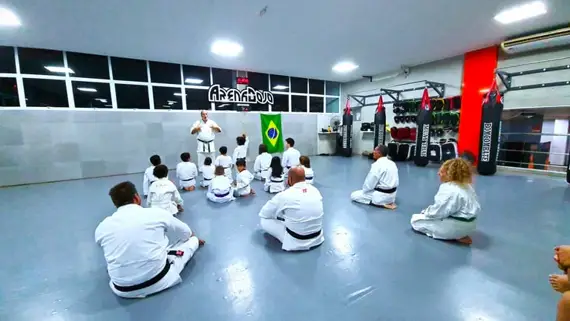
In the beginning, the practitioner learns techniques, or waza, in isolation. Over time, he begins to combine them into sequences, known as renzoku waza. Randomi adds a partner's response and gives room to experiment with distance, time, and decision making.
From technique to free exercise
Randomi is a free practice with defined objectives. Depending on the proposal, it may involve impact techniques (atemi waza), projections (nage waza), work on the ground (ne waza) or finishing actions (todome waza). Techniques and intensity vary depending on the teacher's guidance, exercise conditions and participants' experience.
Before beginning, partners need to understand the limits of the practice. During the exercise, they must adjust the intensity and stop when necessary. When finished, the practitioner can observe what worked and return to kihon and kata to refine their technique.
Trust
Confidence grows when the practitioner recognizes both what they can already perform and the points that need study. Complementary work, such as hojo undo, can help develop posture and strength according to school guidance.
Self-control and concentration
The partner participates in your learning. Regulating strength, sensing distance and responding to each other's signals allows both of you to train with consistency. Concentration includes breathing, positioning, and the ability to track the situation as it changes.
Perseverance
Forgetting a technique or making mistakes when applying it is part of training. The mistake shows what needs to be practiced again. With continuity and guidance, this experience helps to link technique, strategy and human training.
Ganbatte kudasai.